
 English
 한국어
한국어 Français
 Español

Neumáticos macizos para trabajos aéreos: estabilidad, resistencia a pinchazos y guía de selección
En una obra de construcción, un elevador de tijera se detuvo entre grava y barras de refuerzo cuando una pieza de acero doblada pinchó uno de sus neumáticos. El operador ya había descendido ocho metros, pero aún así el trabajo requirió cuatro horas para reemplazar y volver a inflar los neumáticos. Si esa máquina hubiera estado equipada con neumáticos macizos, es posible que la tripulación nunca se hubiera detenido. Vale la pena considerar los neumáticos sólidos para trabajos aéreos no porque cambien la apariencia del equipo, sino porque afectan directamente la seguridad diaria y el costo operativo total.
Contenido
¿Qué son los neumáticos sólidos para trabajos aéreos?
Neumáticos macizos para trabajos aéreos. son estructuras de neumáticos sin cámara y sin aire. Un único compuesto de caucho forma el cuerpo portante y amortiguador, que luego se monta sobre una llanta de acero mediante ajuste a presión o fijación con pernos. A diferencia de los neumáticos, los neumáticos macizos no tienen cavidad de aire, por lo que no sufren fugas, reventones ni fallas por baja presión. Las opciones comunes en la categoría de trabajo aéreo incluyen neumáticos para plataformas elevadoras, neumáticos para plataformas elevadoras de tijera y neumáticos rellenos de espuma.
No confundas un neumático macizo con una rueda completamente rígida. Los compuestos de caucho de alto rendimiento aún absorben los impactos del suelo, pero el comportamiento de compresión y rebote difiere de los diseños llenos de aire. Para las plataformas de trabajo aéreas, esta superficie de contacto rígida ofrece una clara ventaja en sitios de trabajo irregulares: los operadores obtienen información más directa del suelo y el extremo de la plataforma no se retrasa ni se balancea porque el neumático se desvía demasiado.
Por qué las plataformas de trabajo aéreo necesitan neumáticos sólidos
En altura de trabajo, la estabilidad a nivel del suelo determina la seguridad aérea. Los neumáticos macizos no son simplemente una mejora opcional; para los entornos de trabajo más elevados, representan una configuración básica más confiable.
La primera razón es el efecto de magnificación. A una altura de 10 a 20 metros, unos pocos milímetros de movimiento del suelo se convierten en una oscilación perceptible en la plataforma. Los neumáticos introducen una capa suave y elástica que puede permitir que el chasis se balancee, especialmente cuando el terreno es irregular. Los neumáticos macizos proporcionan una zona de contacto más firme y predecible, lo que reduce el movimiento lateral antes de que llegue al operador.
La segunda razón es el riesgo de pinchazo. Los lugares de trabajo están llenos de clavos, metal triturado y grava afilada. Un neumático puede quedar inutilizado con un solo pinchazo, y ese riesgo se vuelve mucho más grave cuando el equipo trabaja en altura. Los neumáticos macizos no tienen aire que perder, por lo que pueden tolerar la mayoría de los residuos comunes sin detener la máquina.
La tercera razón es el tiempo de inactividad. Los neumáticos macizos no requieren controles de presión, ajustes de inflado ni reparaciones de pinchazos. Un equipo que trabaja con una agenda apretada no necesita tener una llanta de refacción y un compresor en el sitio. Si desea comprender cómo la selección de compuestos y la distribución de carga se traducen en estabilidad, nuestro artículo sobre la ventaja tecnológica de los neumáticos sólidos para trabajos aéreos analiza las decisiones clave de ingeniería.
Ventajas clave de los neumáticos macizos para trabajos aéreos
Los principales beneficios se reducen a tres puntos: estabilidad, longevidad y menores gastos operativos.
| Punto de comparación | Neumáticos macizos | Neumáticos |
|---|---|---|
| Estabilidad | Contacto rígido, manejo predecible | Más flexible, puede balancearse bajo carga. |
| Resistencia a la punción | No hay aire que perder, resiste la mayoría de los desechos. | Vulnerable a clavos y objetos punzantes. |
| Mantenimiento | Sin controles de presión, sin reparaciones planas | Requiere controles de presión y reparaciones. |
| Vida útil | Largo, dependiente del compuesto | Más corto cuando se usa en trabajos con mucho desperdicio |
| transferencia de carga | Superficie uniforme para cargas pesadas | Puede deformarse bajo carga concentrada. |
| Comodidad del operador | Comentarios más firmes | Generalmente más suave en terrenos accidentados |
El beneficio de estabilidad proviene de una presión de contacto más uniforme y una menor resistencia a la rodadura. El beneficio de la longevidad se hace evidente cuando los neumáticos pasan sobre asfalto abrasivo, piedra triturada y bordes metálicos afilados. La ventaja de costos se materializa cuando se tienen en cuenta los retrasos en el equipo cada hora: una sola tarde perdida puede costar mucho más que un juego de neumáticos macizos premium.
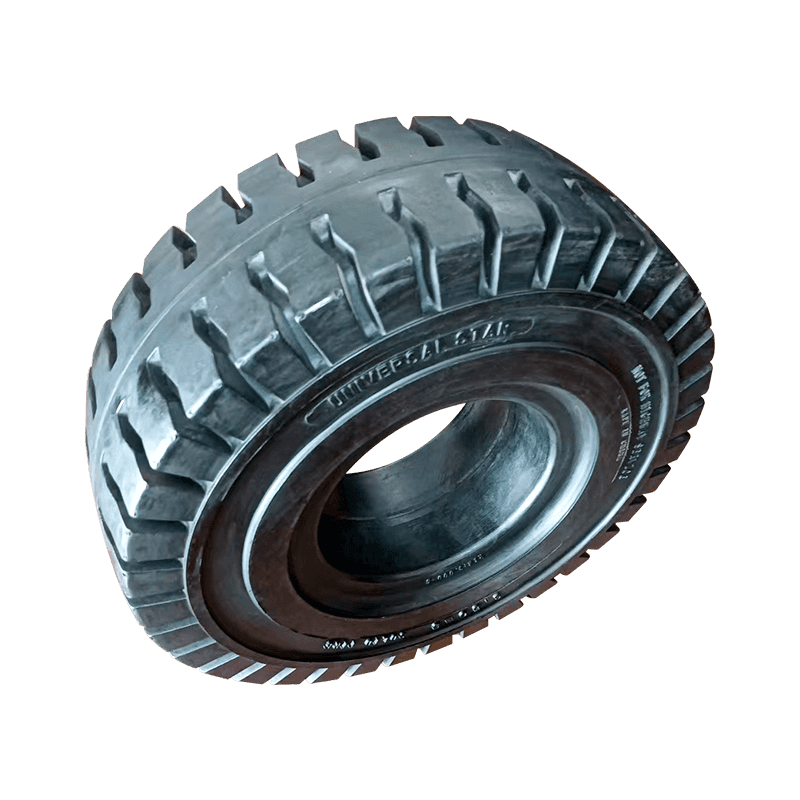
Para las flotas que operan en superficies mixtas con escombros y terreno accidentado, los neumáticos rellenos de espuma son una variación práctica del concepto de neumáticos sólidos. Mantienen la confiabilidad sin aire de un neumático sólido y al mismo tiempo agregan un grado de amortiguación que ayuda a reducir la vibración en la plataforma.
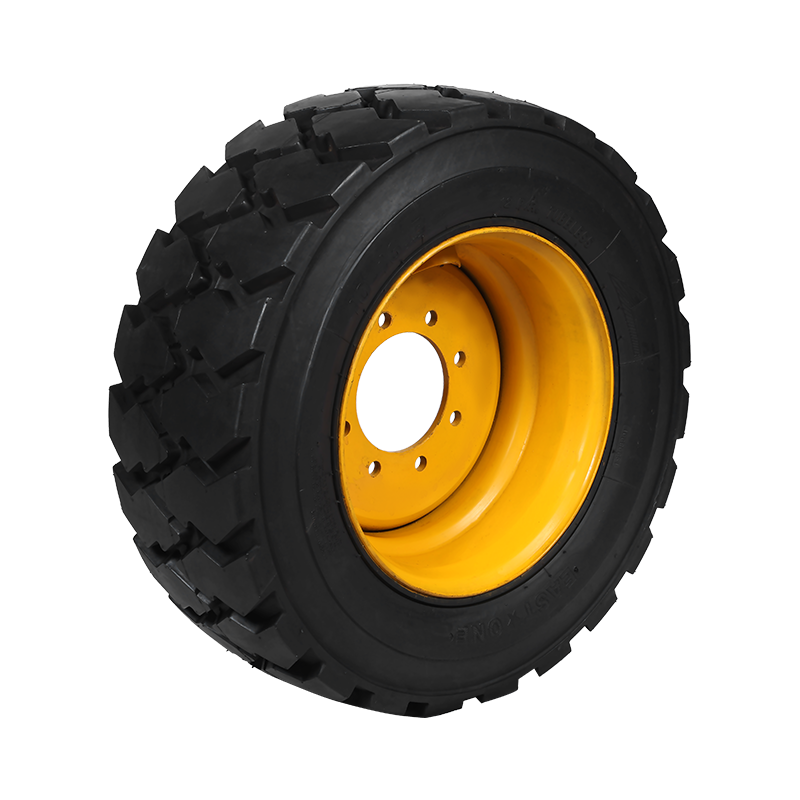 Neumáticos rellenos de espuma para uso en carretillas elevadoras de superficie mixta y plataformas aéreas Estos neumáticos combinan la capacidad de carga de los neumáticos sólidos con una amortiguación similar a la neumática, lo que reduce la vibración en escombros y terrenos accidentados y, al mismo tiempo, mantiene la confiabilidad sin aire para un trabajo continuo. Ver producto →
 Cómo elegir los neumáticos sólidos adecuados para trabajos aéreos
La selección comienza con el tipo de equipo, luego pasa a la capacidad de carga y las condiciones del terreno.
- Determine la carga nominal de la placa de identificación, incluido el peso de la plataforma, el personal y las herramientas. Haga coincidir el tamaño del neumático sólido y el índice de carga con ese número en lugar de elegir un tamaño que simplemente se parezca al original.
- Evaluar el terreno. Los pisos lisos de un almacén requieren un compuesto y un patrón de rodadura diferentes a los de un sitio de demolición con barro, grava y asfalto roto.
- Verifique la llanta y el método de montaje. Los sistemas de ajuste a presión y atornillados requieren dimensiones exactas de la llanta y valores de torque correctos, por lo que una llanta que no coincide puede dañar tanto el neumático como la rueda.
- Considere si la plataforma pasa la mayor parte de su ciclo de trabajo en una posición o se mueve continuamente. El recorrido continuo aumenta la importancia del equilibrio del desgaste y la acumulación de calor.
Aplicaciones de elevación de pluma
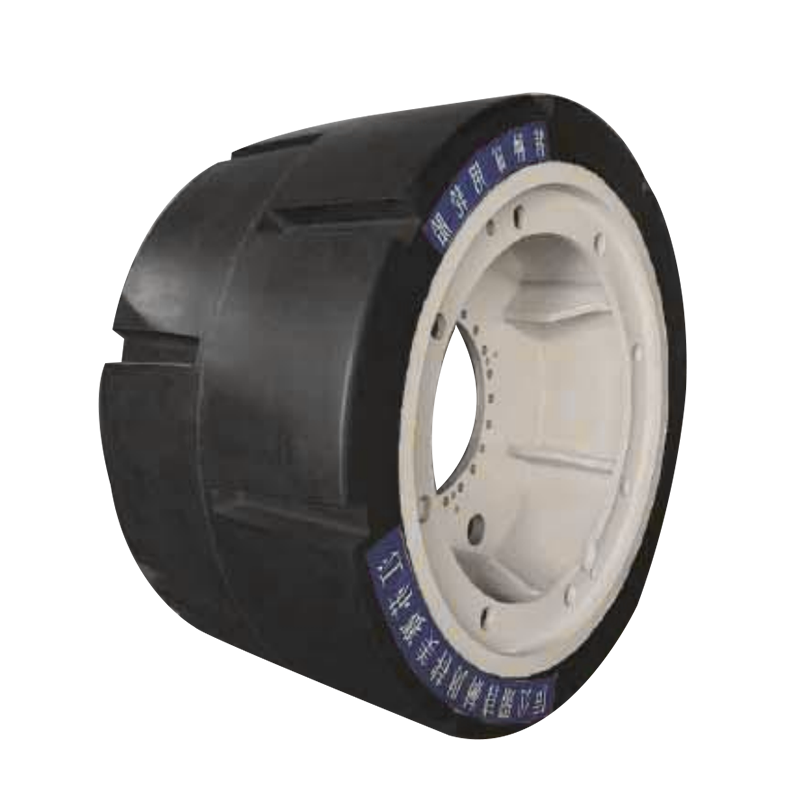
Las plataformas elevadoras suelen operar en sitios de construcción y patios industriales donde el terreno es mixto y los cambios de pendiente son comunes. El neumático debe proporcionar un hombro ancho para la estabilidad lateral y un compuesto resistente a cortes para áreas con mucho escombros. Debido a que el brazo se extiende hacia afuera, las cargas laterales sobre el chasis son mayores, por lo que la rigidez de los neumáticos afecta directamente la seguridad con la que la plataforma mantiene su posición.
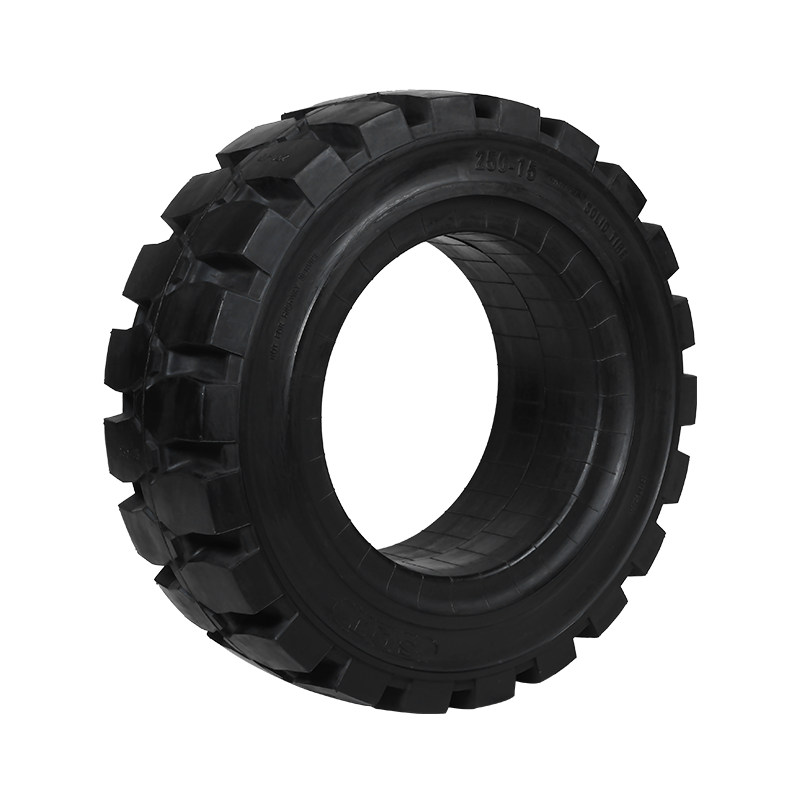 Neumáticos de elevación diseñados para brindar estabilidad lateral en terrenos irregulares La estructura ancha de sección plana y el caucho de alto módulo brindan soporte estable y resistencia a cortes para plataformas elevadoras que trabajan en superficies mixtas, lo que ayuda a que la plataforma mantenga su posición con confianza. Ver producto →
 Aplicaciones de elevación de tijera
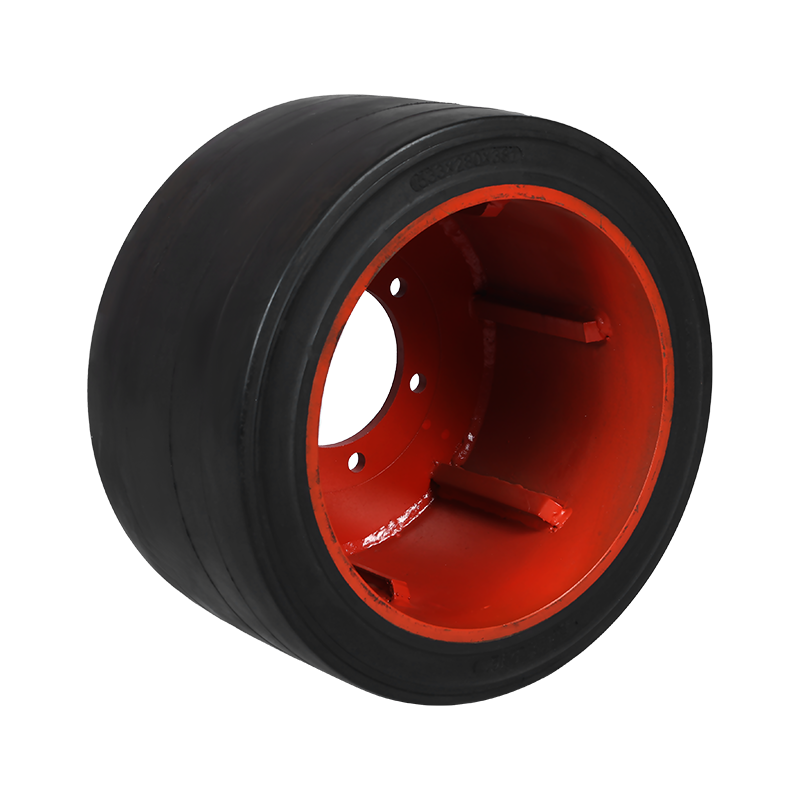
Los elevadores de tijera son más compactos y se utilizan a menudo en espacios reducidos. Su ciclo de trabajo exige giros frecuentes y posicionamiento en línea recta, por lo que el neumático debe ofrecer un desgaste constante y una dirección predecible. Una huella más baja y más ancha ayuda a mantener la plataforma estable cuando la pila de tijeras está completamente elevada y también protege el neumático del desgaste prematuro de la corona.
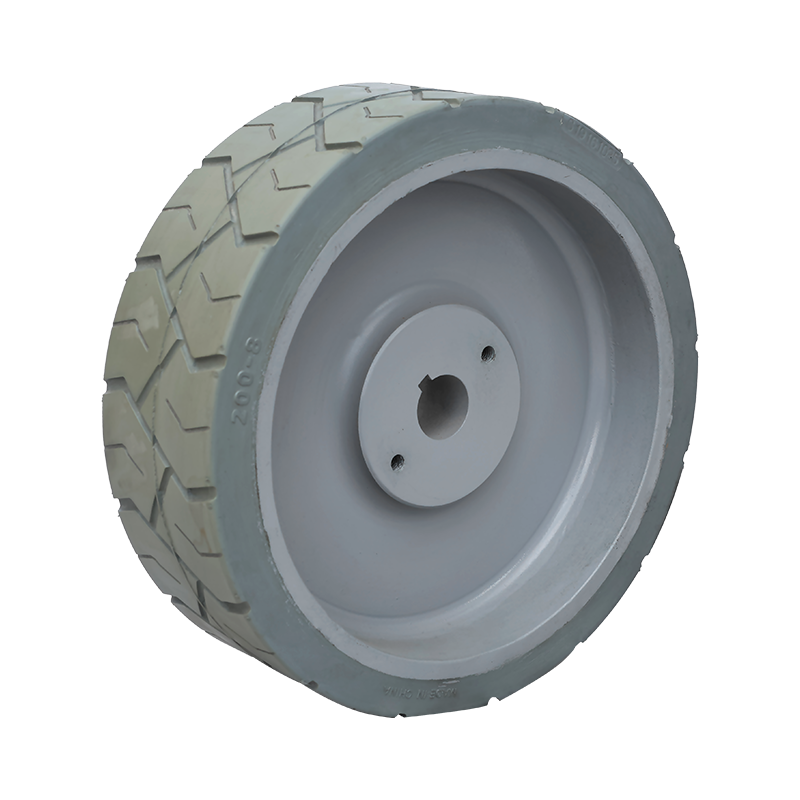 Neumáticos para elevadores de tijera con diseño de banda de rodadura autolimpiante y que no deja marcas Los neumáticos respetuosos con el medio ambiente que no dejan marcas, con una banda de rodadura más profunda y un patrón de autolimpieza se adaptan a los elevadores de tijera de interior, ofreciendo un desgaste constante y una dirección predecible en espacios reducidos. Ver producto →
 Mantenimiento e inspección
Los neumáticos macizos reducen drásticamente el mantenimiento de rutina, pero no están exentos de mantenimiento. Un breve programa de inspección protege las ruedas, las llantas y el chasis de la plataforma en general.
- Mida la profundidad de la banda de rodadura con regularidad. Incluso sin presión de aire, el caucho sólido se desgasta en superficies abrasivas y el desgaste excesivo reduce la superficie de contacto del neumático.
- Inspeccione si hay cortes, astillas y grietas en las paredes laterales. Los desechos afilados aún pueden dañar un neumático sólido, por lo que las inspecciones visuales periódicas detectan el daño antes de que empeore.
- Verifique el torque de los pernos de la llanta después de las primeras horas de operación. Las ruedas sueltas hacen que el neumático se deslice sobre la llanta y pueden dañar la superficie de acero de la llanta.
- Esté atento a la exposición al aceite y al envejecimiento de los rayos UV. Algunos compuestos de caucho se ablandan o endurecen cuando se exponen repetidamente a fluidos hidráulicos y a la luz solar directa.
Para obtener especificaciones detalladas e instrucciones de instalación, consulte directamente la biblioteca de recursos. Una correcta coincidencia de neumático y llanta no es un detalle que debas estimar.
La seguridad en el trabajo aéreo no es una preocupación única; es una cuestión operativa diaria. Los neumáticos macizos eliminan el modo de falla repentina de una cavidad de aire perforada, proporcionan una superficie de contacto estable que soporta la plataforma en altura y reducen el tiempo de inactividad al eliminar el inflado de rutina y la reparación de pinchazos. Para los contratistas de construcción, flotas de alquiler de equipos, operaciones de almacén y equipos de mantenimiento portuario, la inversión en neumáticos sólidos para trabajos aéreos es una compensación razonable a favor de un tiempo de actividad predecible y la seguridad del operador. Si su trabajo depende de máquinas que trabajan en altura, el lugar más seguro para comenzar es un neumático que se niega a desinflarse.
RECOMENDACIONES DE PRODUCTOS RELACIONADOS
CONTÁCTANOS
-

Correo electrónico: SMT001@saimeite-tyre.com
-

Teléfono: +86-18451337018No. 1, Calle Sur de Renmin, Distrito de Yandu, Ciudad de Yancheng, Provincia de Jiangsu, China